News

Foerderung-fuer-erneuerbare-Energien

Funding for Renewable Energy Investment: Why Funding Consultancy is Worthwhile for Companies

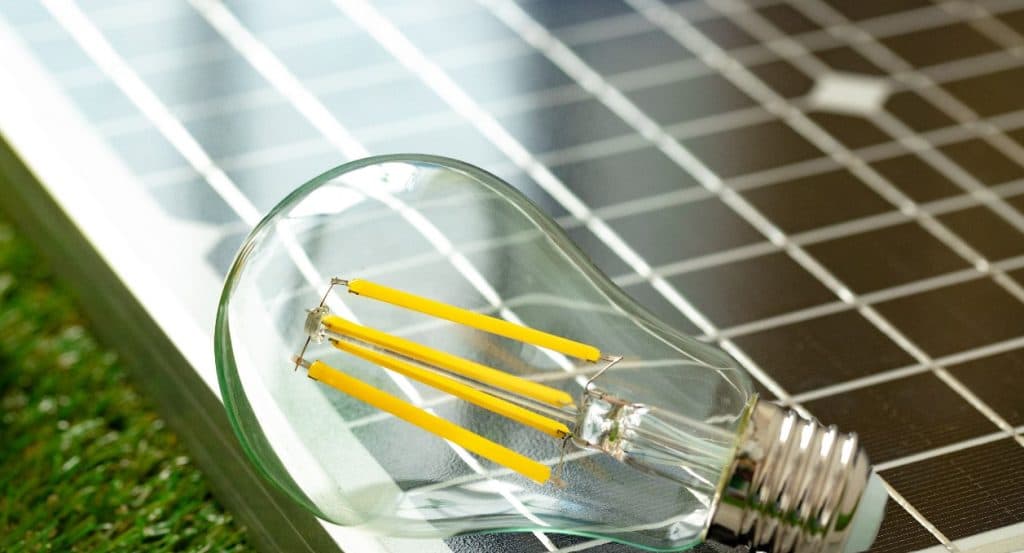
Renewable energy investment makes us more independent from fossil energy imports and significantly contributes to the global energy transition. Not only Germany is driving the energy transition forward, but many countries worldwide are converting their energy systems to climate-friendly electricity, heat, and fuels. The good news is that there are numerous financial incentives for renewable energy investment that can help advance the global energy transition together.

Financial support for renewable energy investment is a central topic for many large companies aiming to achieve their sustainability goals while also benefiting economically. Government subsidies offer an excellent opportunity to finance projects in the field of renewable energy investment and actively shape the energy transition. Funding makes sustainable projects, which are often still expensive to acquire and maintain, possible in the first place. However, the path to successfully applying for and utilizing these funds can be complex and bureaucratic. This is where funding consultancy comes into play.

The Importance of Funding for Renewable Energy Investment 

Funding refers to aid provided by government agencies, the EU, or other institutions to promote projects in the field of renewable energy investment. These funds can be granted in the form of grants, low-interest loans, or tax benefits.

Challenges in Applying for Funding 

Applying for funding is often associated with bureaucratic hurdles. Companies must submit extensive application documents that meet specific requirements and criteria. These include detailed project descriptions, financial plans, and evidence of compliance with environmental standards. The correct accounting and tax treatment of grants can also be complex and require in-depth expertise. Companies must therefore ensure that they meet all requirements transparently and compliantly to avoid future problems.

The Benefits of Funding Consultancy 

Professional funding consultancy can help companies overcome these challenges. As experts, we assist in identifying suitable funding programs and efficiently managing the application process. Our experts provide support in preparing the necessary documents and ensure that all criteria and requirements are met. Additionally, consultants can offer valuable tips to minimize administrative effort, allowing companies to focus on their core competencies.

Successful Projects in Renewable Energy Investment Funding

Many large companies have already successfully utilized funding for their renewable energy investment projects.

For example, FI Group has successfully supported companies in implementing electrification projects (switching from natural gas to electricity). Another example is the promotion of waste heat utilization in a production process. Here too, we successfully guided companies through the application process. The building sector is sometimes an underestimated area when considering projects for funding. Companies advised by us have significantly benefited from funding for renovation measures. These success stories show how professional consultancy can make a difference. Companies were able to implement their projects faster (e.g., when lacking financial resources), make them feasible, reduce costs, and simultaneously contribute to the energy transition.

Current Developments and Figures

The following information comes from a report by the Federal Ministry for Economic Affairs and Climate Action and provides an overview of recent developments in the field of renewable energy investment:

  • Record growth in renewables: In 2023, 560 GW of renewable energies were added worldwide, with the share of renewables in global capacity expansion at 86%. Most renewables were added in China.
  • Renewable electricity production: The International Energy Agency (IEA) predicts that renewable electricity production will surpass coal electricity production by 2025, and the current dynamics of renewable energy expansion are sufficient to meet growing energy demand.
  • Market volume for energy transition technologies: In 2023, the market volume for key energy transition technologies such as solar, wind, e-mobility, batteries, electrolyzers, and heat pumps was around USD 700 billion. The IEA predicts that the market volume will triple by 2035.
  • Employment in the renewable sector: In 2023, global employment in the renewable sector increased by nearly 3 million to 16.2 million. In Germany, over 406,000 people were employed in the renewable sector in 2023, the highest number since 2011.

Funding as a Driver for Your Sustainable Energy Projects

Funding for renewable energy investment offers great opportunities for companies to achieve their sustainability goals and benefit economically. Professional funding consultancy can help overcome bureaucratic hurdles and minimize risks. Companies that take advantage of this support are better equipped to access funding, successfully apply for it, and implement their renewable energy investment projects.

Invest in funding consultancy and take advantage of the numerous opportunities offered by government subsidies. This way, you can not only achieve your own goals but also make an important contribution to sustainable development.

FI Group as your Partner

With our experience in funding consultancy, we stand by your side as a competent partner. From identifying suitable funding programs to application submission to successful implementation and disbursement of funds, we accompany your company with comprehensive expertise.

Warum FI Synergy?

Our holistic FI Synergy approach maximizes your funding amounts and secures you a decisive competitive advantage. Through targeted strategies, we optimize your funding procurement and support you in efficiently realizing sustainable innovations. Our experts are ready to answer your questions.

Foerderungen-fuer-Unternehmen

Funding for Businesses: Expert Knowledge for Successful Project Financing

From Idea to Implementation: Nationwide, Regional (State-Level), and EU Funding for SMEs and Large Enterprises

EU funding consists of grants provided by the European Union to support political objectives and derive measures from them. These grants for businesses can be provided in various areas such as energy, mobility, decarbonization, digitalization, chemistry, artificial intelligence (AI), hydrogen, microelectronics, and more.

The funding financially supports both SMEs (small and medium-sized enterprises) and large enterprises to accelerate the development of member states. These can be applied for investment, research, development, and innovation projects, as well as for operating costs through funding programs at both the national and state levels. They are provided by various ministries with the help of their internal (BAFA, BLE) and external (PTJ, DLR, VDI/VDE, AiF, etc.) project sponsors, banks, or other financial institutions and foundations.

Challenges of Funding Programs

Funding programs offer many advantages for both project financing and a successful implementation plan, but there are also some challenges that should be considered:

  • Overview of all available funding programs
  • Complex application procedures
  • Competition for funds
  • Meeting the conditions
  • Time limitations
  • Administrative effort

These challenges may seem very complex at first glance, but with a well-thought-out strategy, our professional support, and a structured approach, many hurdles can be successfully overcome. It is crucial not only to keep an eye on European funding opportunities but also to specifically utilize funding programs at the federal and state levels. A strategic alignment regarding:

  1. Alignment of the project with funding criteria
  2. Comparison of funding rates of different programs
  3. Identification of eligible costs
  4. Prospects of success and availability of funds
  5. Obligations for publication and transparency requirements
  6. Deadlines and planned (known to us) future funding calls
  7. Previously utilized funding in the past

Professional funding consultants enable companies to save time and access various funding programs through expert knowledge, focusing not only on retrospective innovation funding but also on direct grants.

Funding Consultants: Your Guide Through Business Funding

How Can Funding Consultants Help You Find the Right Funding Programs at Federal, State, and EU Levels?

  • Analysis / Planning: A thorough analysis of the company and its projects to identify suitable funding programs.
  • Strategy Development: Clarifying all prerequisites and conditions to define the work plan.
  • Application Submission: Assistance in creating and submitting funding applications.
  • Project Management / Successful Disbursement of Funds: Support throughout the project duration to ensure all funding conditions are met.

Funding Programs as Examples for Different Levels in the Funding Jungle:

EU Funding

National Funding (Germany)

Regional Funding (Germany)

These examples illustrate the range of funding available to businesses at different levels. Professional funding consultants can help find and successfully utilize the right funding program for your company.

FI Group as Your Partner

We help you maximize the potential of your project funding. Rely on us as your partner for smooth and efficient processing. Contact FI Group today to learn more about how we can lead your company to success through the combination of relevant funding programs with our holistic FI Synergy methodology. Our experts are ready to answer your questions.

Innovation

Future through Research and Innovation: Germany Needs a Restart

Germany is known as a leading research location globally, but its competitiveness has noticeably declined in recent years. Research and Innovation processes are often too slow, regulatory hurdles hinder progress, and there is a lack of a long-term strategy for implementing new technologies.

To counter this development, the Stifterverband, Leopoldina, and VolkswagenStiftung have published a joint position paper for the 2025 Bundestag elections. Titled “Germany as a Location: Future through Research and Innovation” the initiators call for a fundamental change in innovation policy.

Six Key Areas for an Innovation-Driven Future:

The authors – Dr. Michael Kaschke, Dr. Gerald Haug, and Dr. Georg Schütte – have defined six key areas of action that are intended to make Germany future-proof again:

  1. Reorganization and Strengthening of a Federal Ministry for Research and Innovation – with cross-departmental responsibility for technology and research topics.
  2. Reduction of Regulatory Hurdles – more innovation-friendly legislation to facilitate research and development.
  3. Strategic, Implementation-Oriented Planning for Prioritized Innovation Missions – with clear roadmaps across legislative periods.
  4. Setting Goals, Leaving Paths Open – less bureaucracy and more flexibility for innovative actors.
  5. Reduction of Cooperation and Financing Obstacles – research must be easier to promote and private sector investments strengthened.
  6. From Brain Drain to Brain Gain – Germany must become more attractive to international talents, including through an “innovation visa.”

Discussion at the Forum Innovation for the 2025 Directional Election

The proposals were discussed on January 30, 2025, at the Forum Innovation for the 2025 Directional Election with high-ranking representatives from business, science, and politics. The goal was to develop concrete measures to bring Germany back to the top of innovation nations.

The position paper of the Stifterverband sets a clear signal: Germany needs a breakthrough for a strong innovation system. The future of the location depends crucially on how politics, business, and science implement the proposed measures.

The FI Group will continue to accompany this process and support companies in successfully realizing their innovation projects. If you want to learn more about how your innovation and investment projects can be funded through grants and subsidies, feel free to contact us.

Investitionen-in-Forschung-und-Entwicklung

Investments in R&D

How Investments in R&D Directly Contribute to Global Success

Investments in Research and Development (R&D) directly contribute to global success for several reasons. R&D drives innovation, strengthens competitive advantage, facilitates market expansion, and contributes to sustainable development. The link between growth and innovation is evident in how innovative activities lead to improved products, services, and processes, ultimately resulting in business growth.

Innovation as a Catalyst for Differentiation:

  • Product Innovation: Investments in R&D enable companies to develop new products or improve existing ones to meet changing customer needs. This differentiation is crucial to remain competitive in a crowded market.
  • Process Innovation: R&D efforts often lead to more efficient production processes, reducing costs and improving quality. This can result in better profit margins and the ability to offer competitive prices.
  • Technological Advancement: Staying at the forefront of technology through continuous R&D allows companies to leverage the latest advancements, making them more agile in responding to market changes. This technological edge can be a significant competitive advantage.

Market Expansion through R&D:

  • Entering New Markets: Innovative products and services can open up new markets and customer segments, providing growth opportunities. Companies that invest in R&D are better positioned to identify and capitalize on these opportunities.
    • Global Reach: R&D can tailor products to the specific needs of different markets, increasing global appeal and enabling successful international expansion.
  • Meeting Regulatory Requirements: R&D investments allow companies to develop products and processes that comply with applicable regulations, ensuring compliance.

Contribution to Sustainable Development:

  • Sustainable Innovation: R&D initiatives focused on sustainability can lead to the development of environmentally friendly processes that align with global trends towards environmental responsibility. This not only enhances a company’s reputation but also meets the growing consumer demand for sustainable products.
  • Energy Efficiency: Innovations in energy-efficient technologies and processes can reduce operating costs and environmental impact, contributing to long-term sustainability and profitability.

Correlation Between Growth and Innovation:

  • Revenue Growth: Companies that continuously invest in R&D typically experience higher revenue growth through the introduction of innovative products and services that attract new customers and retain existing ones.
  • Market Share Expansion: Innovation enables companies to capture larger market shares by offering unique value propositions that set them apart from competitors.
  • Intellectual Property and Patents: R&D efforts often result in valuable intellectual property (IP), including patents, which can provide additional revenue streams through licensing or be used defensively to protect market share.
    • Barriers to Market Entry: Patents and proprietary technologies create barriers for competitors, securing a company’s market position.
  • Customer Loyalty and Brand Strength: Innovative companies are often seen as leaders in their field, strengthening brand reputation and customer loyalty. This strong brand recognition supports sustainable growth and resilience to market fluctuations.

The Strategic Importance of R&D:

  • Apple vs. Blackberry: As one of the leading mobile phone brands 20 years ago, Blackberry developed one of the first smartphones. Blackberry’s once-dominant market position was weakened by its slow adaptation to touchscreen technology and app development. In contrast, Apple invested heavily in research and development and continuously brought innovative products to market, while Blackberry did not invest enough effort.
  • Netflix vs. Blockbuster: Unlike Netflix, which developed its technology in parallel with market trends, Blockbuster could not keep up. Their business model remained unchanged in the face of media delivery and further unchanged in the face of media streaming. When Netflix switched to on-demand, Blockbuster was far behind and could no longer catch up with the technological development of its competitors. Adapting to the industry is crucial for business development, which Blockbuster did not recognize.
EU Funding: “Strategic Technologies for Europe Platform“ (STEP)

EU Funding: “Strategic Technologies for Europe Platform“ (STEP)

EU Launches New Online Portal to Support Investments in Critical Technologies

The European Commission has launched a new online portal for the EU initiative “Strategic Technologies for Europe Platform” (STEP). This one-stop-shop allows investors, project promoters, and national administrative authorities to access crucial information and identify EU funding in three strategic sectors: digital and deep-tech technologies, clean and resource-efficient technologies, and biotechnologies.

The Importance of Strategic Technologies for Europe Platform

The role of EU funding in these sectors lies in its ability to strengthen the EU’s technological sovereignty and accelerate the transition to a sustainable and digital economy. STEP focuses on projects in the development and production phases in three sectors that are crucial for the green and digital transformation:

  • Digital and High-Tech Technologies: Promoting innovation and competitiveness of European companies, e.g., in the fields of artificial intelligence, quantum technologies, and advanced connectivity.
  • Clean and Resource-Efficient Technologies: Supporting the achievement of climate goals and the development of environmentally friendly solutions, e.g., carbon capture and storage technologies and heat pumps.
  • Biotechnologies: Promoting innovations in healthcare and sustainable agriculture, e.g., molecular biotechnology, pharmaceuticals, and plant biotechnology.

Key Features of the STEP Portal

The STEP portal is designed to simplify the process of finding and securing EU funding for high-quality projects. These projects could include the development of new antiviral agents, the establishment of AI models within the EU, or the support of SMEs in the field of green technologies. To maximize public and private investments, eligible high-quality projects receive a “STEP Seal” and are actively promoted through the STEP portal.

Mobilizing Resources for the European Industry

STEP leverages resources from eleven EU investment programs to support the European industry and boost investments in critical technologies across Europe. This initiative aims to enhance the EU’s competitiveness and reduce strategic dependencies. The Commission is currently reviewing the first projects from member states to support investments in clean, digital, and biotechnological technologies. A list of specific projects funded through STEP will be published in the coming months.

The launch of the STEP portal marks a significant advancement in supporting investments in critical technologies within the EU. By providing a central platform for accessing EU funding and financing high-quality projects, the EU aims to foster innovation, sustainability, and competitiveness across its member states.

FI Group as Your Partner

FI Group is your reliable partner when it comes to making effective use of funding at all levels (EU, national and regional) and maximizing the success of your projects.

With our comprehensive expertise and a deep understanding of the challenges in R&D, we support you from the preparation of your application to project completion.

Why FI Synergy?

Our holistic FI Synergy methodology combines strategic consulting with operational project management to maximize your chances of success. We offer tailored solutions that are precisely aligned to your needs and the specific requirements of funding programs. Learn more about how we can safely and successfully support your innovation projects.

Carbon Contracts for Difference (CCfD)

Carbon Contracts for Difference (CCfD)


With the Carbon Contracts for Difference (CCfD), the German Federal Government plans to guarantee the funding of differential costs. This measure is intended to offset the higher costs of environmentally friendly production methods compared to conventional methods, thereby creating an additional incentive for transitioning to sustainable processes. The funding provider is the Federal Ministry for Economic Affairs and Climate Action (BMWK).

In summary, Carbon Contracts for Difference ensure that companies investing in technologies to reduce greenhouse gas emissions are financially supported to enhance the profitability of these investments and minimize risk. This creates an incentive to invest in greener technologies and contribute to environmental protection without compromising the financial stability of the company.

Carbon Contracts for Difference begin with crucial initial bidding round

On March 12, 2024, Dr. Robert Habeck, Federal Minister for Economic Affairs and Climate Action, announced the start of the first bidding round for the Carbon Contracts for Difference. During the preparatory process in the summer of 2023, numerous companies from emission-intensive industries engaged. It is important to note that only companies that participated in last year’s preparatory process are eligible to participate in the current bidding round. These companies are now called upon to submit their bids for the provision of funding. A total of 4 billion euros is available for this first round. Future rounds are planned. Please contact us if you require support during the bidding process or for new calls.

What are the goals of the funding program?

The Carbon Contracts for Difference are designed to decisively advance Germany towards carbon neutrality by 2045 and serve as a key tool to support the emission-intensive industry in transforming their production processes:

  • Reduction of greenhouse gas emissions: A central goal is the significant reduction of CO2 emissions. By 2045, a total of 350 million tons of CO2 is expected to be saved, corresponding to an annual reduction of up to 20 megatons of CO2.
  • Promotion of technological innovation: In addition to immediate emissions reductions, the CCfD aim to promote the development and implementation of modern, environmentally friendly technologies. A special focus is on the use of green hydrogen, which must meet strict environmental standards to be recognized as sustainable.
  • Economic efficiency and security: The CCfD offer financial security to companies and help them minimize the economic risks associated with transitioning to cleaner technologies. By providing funding over a 15-year period, investments in new technologies and processes are significantly facilitated, enhancing the long-term planning and competitiveness of German companies.

These goals reflect the comprehensive commitment of the BMWK to not only adapt the industrial sector to current climate realities but also actively shape a sustainable and competitive industrial future for Germany.

How is the funding mechanism structured?

The BMWK has introduced an auction process to optimize the allocation of funding. In this process, companies submit bids specifying how much financial support they need to avoid a ton of CO2. Awards are given to those companies whose technologies can achieve CO2 savings most cost-effectively. This promotes a competitive climate while ensuring that the

available funds are optimally utilized. In return, the usual documentation, and proof obligations, which can burden companies and lead to cumbersome approval processes, are eliminated.

The Carbon Contracts for Difference (CCfD) not only compensate for the additional costs of environmentally friendly production methods but also provide a hedge against the volatile prices of crucial raw materials such as hydrogen. This offers financial stability to companies and reduces the risk of long-term investments.

Who is eligible to apply?

Eligible participants in the Carbon Contracts for Difference are major CO2 emitters from industrial sectors, such as the paper, glass, chemical, and steel industries. These sectors often face particularly large challenges in reducing their emissions due to the nature of their production processes. In detail:

  • Companies from energy-intensive industries located in Germany.
  • Small and medium-sized enterprises (SMEs) and larger companies that exhibit significant CO2 emissions.
  • Consortia of industry and research that develop and implement innovative solutions for CO2 reduction.

What are the prerequisites for funding?

Applicants must have participated in the preparatory process to be eligible for the subsequent bidding process. Those who did not participate or who did not submit the required information completely and on time will be excluded from the bidding process, referred to as a material exclusion deadline.

Evaluation Criteria:

  • Cost-efficiency of funding: Bids are evaluated based on how cost-effectively the project can achieve the funding goals compared to other bids. This includes an analysis of the required subsidy per unit of greenhouse gas reduction.
  • Relative greenhouse gas emissions reduction: Projects are evaluated in terms of their potential and actual effectiveness in reducing greenhouse gas emissions, compared to the baseline scenario or other technologies.
  • Financial pre-qualification: Applicants must provide proof of a security performance that corresponds to 0.1% of the requested maximum total funding amount. This serves as financial pre-qualification to ensure that applicants have the necessary financial stability and commitment to carry out the proposed projects.

These criteria ensure that only well-prepared and financially stable applicants enter the bidding phase, and that the projects selected for funding provide effective and efficient emissions reductions that align with the overarching goals of the Carbon Contracts for Difference.

What is the implementation period?

The Carbon Contracts for Difference have a duration of 15 years, starting with the operational start of the project. The approval authority may extend the deadline upon request if unforeseen events such as force majeure cause a delay.

What are the eligible costs?

The eligible costs specifically include additional expenses incurred through the implementation of low-emission production processes. These costs are assessed in relation to a corresponding reference system and include:

  • Investments in new technologies: Costs for the acquisition and installation of technologies that enable more efficient and lower-emission production.
  • Adaptation of existing facilities: Expenses for the modification and optimization of existing production facilities to reduce emissions levels.
  • Transition processes: Costs arising from the transition to more environmentally friendly production processes, including possible training for the operating personnel.
  • Comparison with reference systems: The additional costs are considered in comparison to the costs of a conventional, less environmentally friendly system to determine the specific eligibility for funding.

Overview

The bidding process initiated on March 12, 2024, runs over a period of four months. A second preparatory process is planned for the summer of 2024, followed by another bidding round towards the end of the year. Additional funding rounds are anticipated. The Federal Ministry for Economic Affairs and Climate Action (BMWK) has provided a mid-double-digit billion amount for the CCfD program to sustainably strengthen Germany as a location for innovation.

The planned program of climate protection agreements should be aimed at recipients similar to the funding programs “Federal funding for efficient buildings (BEG)” and “Energy and Resource Efficiency in the Industry (EEW)”. In our articles you can find out more about the funding requirements and the application process.

If you want to discover more funding programs, visit our grants searcher. We would be happy to support you in applying for grants and research allowances. If you have any questions, please do not hesitate to contact us. We look forward to successfully helping you achieve funding for your projects.

What is the TRL (Technology Readiness Level) scale?

What is the TRL (Technology Readiness Level) scale?

The Technology Readiness Level (TRL) scale is used to assess the technological maturity of an innovation or technology before its operational implementation. This tool is commonly used in the field of research and development (R&D) to provide a common understanding of a technology’s degree of readiness.

Technology Readiness Level: A NASA initiative

NASA (National Aeronautics and Space Administration) developed the TRL scale in the 1970s. Originally, this tool had 7 levels of maturity and was used to manage the technological risks of NASA programmes. It was not until 1995, however, that a final, global version of the scale was published, comprising 9 different maturity levels altogether.

Definition of maturity levels

The TRL scale is made up of nine levels, numbered from 1 to 9, representing different stages of technological development. Each TRL is associated with specific criteria that describe the characteristics and performance of the technology at that stage of development.

What does a Technology Readiness Level (TRL) mean?

Evaluating a technology’s TRL enables us to understand where it is in its development cycle and to identify the remaining stages required to reach maturity and commercialization.

The scale is used by researchers, engineers, companies and organizations to assess the TRL.

The 9 TRLs

Idea

  • TRL 1 – Fundamental research
    This is the initial stage of research in which the scientific principles are investigated and understood.
  • TRL 2 – Applied research
    Scientific principles are applied
    to develop technological concepts and prototypes.
  • TRL 3 – Experimental proof of concept
    Experiments are carried out 
    to demonstrate the feasibility of the technology and validate the basic principles.

Research, development and demonstration

  • TRL 4 – Laboratory verification
    The technology is tested in the laboratory to evaluate its performance and functionality.
  • TRL 5 – Simulated environment validation
    The technology is tested in simulated conditions approximating the actual environment it is to be used in.
  • TRL 6 – Validation in an operational environment
    The technology is tested in an operational environment to assess its performance in real-life conditions. This crucial stage calls for the demonstration of an actual system’s prototype.

Reallabs

  • TRL 7 – Initial operational deployment
    The technology is put to limited operational use and evaluated (at prototype scale) under real-life conditions.
  • TRL 8 – Qualified system with proof of functionality in the operational environment
    The technology is used on a large scale in its final form. Full integration and validation completed.
  • TRL 9 – Market-ready technology
    The technology in its final form is fully developed, validated and ready to be marketed and deployed on a large scale.

The TRL scale and public funding

Horizon Europe

In 2014, the TRL scale was incorporated in projects funded by the European Union (EU) as part of the Horizon 2020 framework programme.

The Horizon Europe programme then adopted the TRL scale as an indicator to improve the positioning of projects applied for in the programme. This unified scale enables applicants and evaluators to meet the expectations of the European Commission (EC).

This makes the TRL scale a key tool in the Horizon Europe 2021-2027 framework conditions for participation. To be eligible for funding, projects need to meet the following requirements:

Activity Funding rate TRL
RIA Research & Innovation Actions 100 % + 25 % 4 – 6
IA Innovation Actions 70 % + 25 % 6 – 8
CSA Coordination & Support Actions 100 % + 25

A higher TRL in a call text thus clearly indicates that the EC is looking for a more applicative solution within the project, while a lower TRL indicates that a more fundamental research project is expected.

The TRL is also used to indicate the ‘entry point‘, i.e. the maturity level of a given technology, product or process at the start of the project. In this case, the respective TRL serves as the ‘lower limit’.

Innovation grants and subsidies

In the application procedure for subsidies and innovation, funding agencies use the TRL scale to assess the eligibility of different innovative projects.

Funding of innovation projects

Funding of investment projects

CIR / CII

The Technology Readiness Level scale is also used to assess the eligibility of projects for tax credits, such as the Research Tax Credit (CIR) and Innovation Tax Credit (CII).

Projects in the early stages of development are eligible for CIR, while projects further up the TRL scale are eligible for CII.

FI Group as Your Partner

FI Group is your reliable partner when it comes to making effective use of funding at all levels (EU, national and regional) and maximizing the success of your projects.

With our comprehensive expertise, we support you from the preparation of your application to project completion.

Why FI Synergy?

Our holistic FI Synergy methodology combines strategic consulting with operational project management to maximize your chances of success. We offer tailored solutions that are precisely aligned to your needs and the specific requirements of funding programs. Learn more about how we can safely and successfully support your innovation projects.

Q&A Climate Protection Contracts

Q&A Climate Protection Contracts

1. What are Climate Protection Contracts?

Climate Protection Contracts are a form of government funding aimed at assisting companies in reducing their greenhouse gas emissions. These contracts create incentives for the adoption of climate-friendly technologies and sustainable production processes.

2. How do Climate Protection Contracts work?

The core mechanism of Climate Protection Contracts involves companies submitting bids stating the amount of funding they require to save one tonne of CO2. These bids are determined through an auction process. Companies with the most economically viable offers are awarded the contracts. The companies receive funding based on a fixed contract price per ton of CO2 saved, which is dynamically adjusted according to various factors such as the emissions trading price or the price of energy carriers.

3. Which companies are suitable for Climate Protection Contracts?

Climate Protection Contracts primarily target companies in emissions-intensive sectors such as steel, cement, paper, or glass, which contribute significantly to greenhouse gas emissions. The funding program has been expanded to allow small and medium-sized enterprises to benefit from Climate Protection Contracts as well. The entry threshold has been lowered to 10 kT CO2 equivalent, which must be saved by the project. Additionally, companies are allowed to form consortia to implement projects together with other partners.

4. How large is the available funding amount?

The available funding amount for Climate Protection Contracts is impressive. The Federal Ministry for Economic Affairs and Climate Action provides a funding pool with a total amount in the mid-double-digit billion range. This financial support enables the industry to implement their sustainable projects and drive the transition towards climate-friendly production. With this considerable funding amount, it is evident that the federal government is sending a strong signal for climate protection and supporting companies in their efforts to build a sustainable future.

5. What are the benefits for companies through Climate Protection Contracts?

Companies participating in Climate Protection Contracts receive financial support to implement their climate-friendly investments. By mitigating price risks and compensating for additional costs, Climate Protection Contracts facilitate the transition to sustainable production processes. Moreover, these contracts provide companies with planning security and enable long-term investments in transformative technologies.

6. Which projects are supported by Climate Protection Contracts?

Climate Protection Contracts support projects aimed at reducing greenhouse gas emissions and deploying innovative technologies for climate-friendly production. This includes the expansion of renewable energies, the utilization of hydrogen as an energy carrier, and the implementation of energy-efficient production methods.

7. What is the duration of Climate Protection Contracts?

Climate Protection Contracts have a standard duration of 15 years, providing companies with planning security and sufficient time to implement their sustainable projects. The extended duration also allows private investors to invest in climate-friendly facilities alongside government support.

8. What are the financial benefits of Climate Protection Contracts?

Through Climate Protection Contracts, companies receive financial support based on the additional costs incurred for climate-friendly production compared to conventional methods. This enables better cost calculations and risk mitigation, particularly for emerging technologies such as hydrogen utilization.

9. What are the legal frameworks for Climate Protection Contracts?

The legal frameworks for Climate Protection Contracts are established by the Federal Ministry for Economic Affairs and Climate Action. The funding complies with the requirements of EU state aid rules and other relevant legal provisions.

10. How can companies apply for Climate Protection Contracts?

Companies can apply for participation in Climate Protection Contracts through a preparatory procedure (often referred to as an Expression of Interest procedure). They need to submit their project plans and the required information in accordance with the guidelines. After evaluation, the bidding process for the allocation of Climate Protection Contracts is conducted.

11. What is a preparatory procedure?

The preparatory procedure is the initial step in participating in Climate Protection Contracts. Companies can notify the Federal Ministry for Economic Affairs and Climate Action of their projects and interest in funding through Climate Protection Contracts. Based on this information, the bidding process is carried out. Participation is still possible until August 7, 2023.12. Can companies apply with partners? Yes, companies can apply individually or jointly with other companies as a consortium for funding through Climate Protection Contracts. This allows for cooperative project implementation and shared utilization of resources and expertise. It also reduces the risk for each individual participant and promotes the implementation of large-scale projects.

12. Can companies apply with partners?

Yes, companies can apply individually or jointly with other companies as a consortium for funding through Climate Protection Contracts. This allows for cooperative project implementation and shared utilization of resources and expertise. It also reduces the risk for each individual participant and promotes the implementation of large-scale projects.

Certifications

Certification FI Group
FI Group Deutschland GmbH
@FI Group by EPSA Copyright 2025